Expert Care by Dr. Curantur
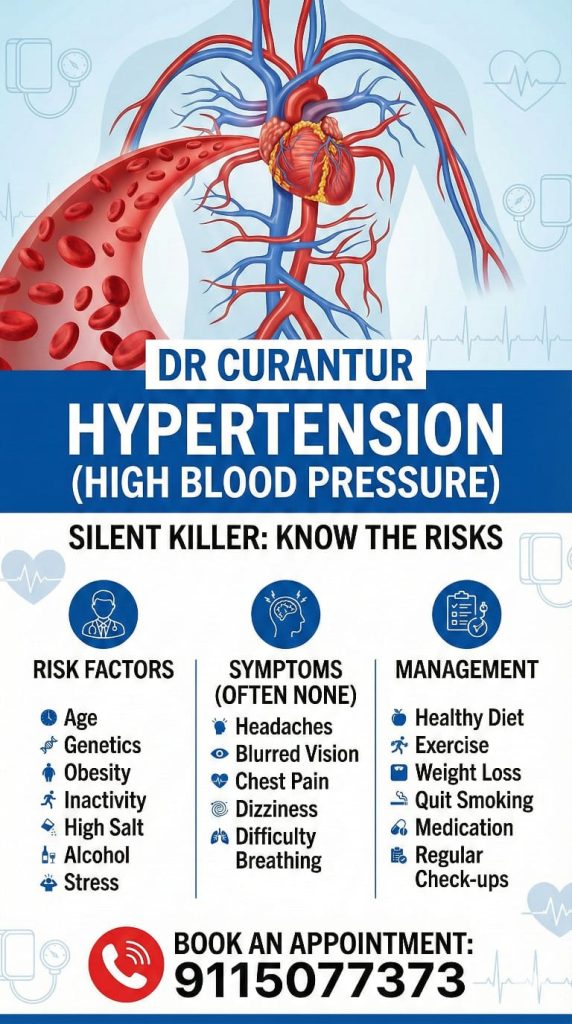
Hypertension, commonly known as high blood pressure, is a widespread cardiovascular condition and a leading risk factor for heart disease, stroke, kidney failure, and vision loss. Often developing without early symptoms, hypertension is widely referred to as the “silent killer.” Understanding the types of hypertension, their causes, symptoms, and treatment options is essential for early diagnosis and long-term health.
Dr. Curantur offers a comprehensive and individualized approach to hypertension management, combining medical insight, lifestyle guidance, and homoeopathic care.
Types of Hypertension and Their Causes
Primary (Essential) Hypertension
Primary hypertension accounts for nearly 90% of hypertension cases in adults. It has no single identifiable cause and usually develops gradually over time. Common contributing factors include:
- Genetic predisposition and family history
- Increasing age and arterial stiffness
- Chronic stress and sedentary lifestyle
- Obesity and physical inactivity
- High salt intake and unhealthy dietary habits
Most cases of hypertension in adults fall under this category.
Secondary Hypertension
Secondary hypertension results from an underlying medical condition or medication. Blood pressure may improve significantly once the root cause is treated. Common causes include:
- Kidney disease or narrowed renal arteries
- Hormonal and endocrine disorders (thyroid or adrenal imbalance)
- Long-term use of certain medications such as steroids, painkillers, or oral contraceptives
- Sleep apnea and chronic systemic illnesses
Resistant Hypertension
Resistant hypertension is diagnosed when blood pressure remains uncontrolled despite the use of two or more antihypertensive medications. This type significantly increases the risk of heart attack, stroke, and kidney damage and requires specialized evaluation and close monitoring.
Isolated Systolic Hypertension
Seen commonly in older adults, isolated systolic hypertension is characterized by elevated systolic pressure with normal diastolic pressure. If untreated, it becomes a major contributor to cardiovascular disease.
Accelerated (Malignant) Hypertension
Accelerated or malignant hypertension is a medical emergency marked by a sudden and severe rise in blood pressure. It may lead to acute organ damage involving the heart, brain, kidneys, or eyes and requires immediate medical attention.
Causes of Hypertension
Hypertension develops due to a combination of genetic, lifestyle, and medical factors. Key causes include:
- Family history of high blood pressure
- Aging and loss of arterial elasticity
- High-salt and high-fat diet
- Obesity and lack of physical activity
- Smoking, alcohol excess, and chronic stress
- Kidney disease, hormonal imbalance, and certain medications
Symptoms of Hypertension
Most people with hypertension experience no symptoms in the early stages, making routine screening essential. When blood pressure rises to dangerous levels, symptoms may include:
- Persistent or throbbing headaches
- Shortness of breath during routine activities
- Blurred vision or visual disturbances
- Chest pain or tightness
- Dizziness, fatigue, or recurrent nosebleeds
Importance of Regular Blood Pressure Monitoring
Because hypertension is often asymptomatic, regular blood pressure monitoring is critical. Readings consistently at or above 130/80 mmHg should prompt medical evaluation. Early detection helps prevent serious complications and improves long-term outcomes.
Homoeopathic Medicines for Hypertension and Their Indications
Homoeopathy provides a holistic and individualized approach to managing hypertension by addressing the patient’s physical, emotional, and mental profile rather than focusing only on blood pressure numbers. This approach may be especially beneficial in primary (essential) hypertension.
How Homoeopathy Helps in Hypertension
Homoeopathic treatment aims to:
- Regulate blood pressure naturally
- Address stress, anxiety, and lifestyle imbalance
- Reduce the risk of long-term complications
- Support overall cardiovascular health
Commonly Indicated Homoeopathic Medicines
Nux Vomica
Indicated in hypertension related to stress, sedentary lifestyle, irritability, and excessive use of stimulants such as coffee or alcohol.
Allium Sativum
Useful in hypertension associated with high cholesterol, palpitations, and chest discomfort.
Baryta Mur
Indicated in isolated systolic hypertension, particularly in elderly patients with arteriosclerotic changes.
Crataegus Oxyacantha
A supportive heart remedy that improves cardiac function and circulation in hypertensive patients.
Natrum Mur
Helpful in hypertension linked to emotional stress, grief, and salt sensitivity.
⚠️ Medicine selection depends on individual symptoms, medical history, and hypertension type.
Homoeopathic Tinctures for Hypertension and Their Indications
Homoeopathic mother tinctures are often used under professional supervision as part of an individualized hypertension treatment plan.
Commonly Used Homoeopathic Tinctures
Crataegus Oxyacantha (Q)
- Weak heart function and palpitations
- Breathlessness and chest discomfort
- Cardiac support in elderly patients
Rauwolfia Serpentina (Q)
- Persistent or long-standing hypertension
- Anxiety, restlessness, and insomnia
Allium Sativum (Q)
- Hypertension with high cholesterol
- Arterial stiffness and chest tightness
Amyl Nitrosum (Q)
- Sudden rise in blood pressure
- Flushing, throbbing headaches, chest constriction
Adonis Vernalis (Q)
- Weak or irregular heartbeat
- Fluid retention and cardiac insufficiency
Baryta Mur (Low Potency)
- Isolated systolic hypertension
- Age-related vascular rigidity
Expert & Personalized Care by Dr. Curantur
Dr. Curantur follows an individualized, holistic, and evidence-informed approach to hypertension management. Each patient receives personalized evaluation, regular monitoring, lifestyle guidance, and carefully selected homoeopathic treatment. Integration with conventional care is ensured whenever required for safe and effective blood pressure control.